
Financing a company purchase: from assessment to a successful introduction to lenders
We take your transaction to the right financing partners in a structured way: independent of banks, discreet and with access to more than 2,500 institutions in the DACH region. We create competition for the best terms.
- Independent of banks
- Anonymous and discreet
- Free of charge for buyers
The Quick Check
A few details are all it takes. You see whether your deal is viable from a bank’s cash-flow perspective and, if not, what is missing and which levers you have. Suitable for acquisitions of profitable companies with at least two annual financial statements.
Preliminary result: it will be refined once all details are complete.
- Total requirement incl. ~5 % transaction costs
- Bank loan required
- Debt / EBITDA
- DSCR (indicative)
Debt / EBITDA: the required bank loan divided by EBITDA. DSCR: how many times the cash flow available for interest and repayment covers the debt service.
- Increase equity by about
- or negotiate about more in seller loan (subordinated and subject to a standstill, counted in full)
- or a purchase price of up to about plus about 5 % transaction costs from your own funds
Your equity has to cover the transaction costs of about ; a higher seller loan cannot replace them.
- Your viable budget is a purchase price of about plus about 5 % transaction costs from your own funds: view matching companies on DUB
- Questions about your case, for example about collateral or a business property? Write to our financing team.
- Questions about your case? Write to our financing team, they will get back to you shortly.
Assumed: annuity repayment, 6,0 % p.a., 7-year term, transaction costs 5 %, cash flow available for debt service 70 % of EBITDA. A seller loan is assumed to be subordinated and subject to a standstill, and counts in full; your equity covers the transaction costs. Indicative, no financing commitment, no advice.
How far this result goes: The check assesses viability purely on a cash-flow basis and is a first orientation, not a financing commitment. It does not consider collateral; we review that individually. In special cases the picture can differ considerably, for example when a business property makes up a substantial part of the purchase price (e.g. care homes, hotels: then the property value counts as well).
Financing a company purchase: what matters in acquisition financing
Acquisition financing is the financing of the purchase price in a company takeover, usually from the buyer’s equity, a bank loan and often a seller loan; development loans or mezzanine capital can complement it.
Whether it is a management buy-in (MBI), a management buy-out (MBO), a business succession or a strategic add-on acquisition: sound acquisition financing often decides whether the transaction succeeds. We structure the purchase price financing of your company purchase so that banks can work with it, assess its financeability based on earnings power, equity and seller contributions, and approach suitable financing partners in the DACH region.
A classic bank loan is only one building block. To finance a company takeover, we combine, depending on the case, senior loan tranches, mezzanine capital, seller loans and equity into a structure that fits the cash flow and the collateral. This creates competition for better terms instead of relying on a single offer.
Who our acquisition financing is suitable for
Suitable
- Purchase of established companies with a solid earnings or asset base (at least two annual financial statements)
- MBI, MBO, succession or strategic add-on acquisition, in each case as a majority acquisition of at least 50 percent of the shares
- Refinancing and follow-on financing, also for acquisitions that have already been completed
Not suitable
- Start-up and early-stage financing
- Restructuring cases without solid fixed assets
- Projects without a solid base of earnings and figures
How we finance your company purchase: in four steps
From request to introduction: this is how your acquisition financing works.
Request & preliminary review
You fill in our digital questionnaire on the transaction and upload the key documents. We assess the financeability of your project based on transaction- and company-specific documents. For a first cash-flow assessment, feel free to use the Quick Check.
Bank-ready preparation
Only if we see a green light do we turn your documents into a solid, anonymous financing pack that lets a lender reach a decision quickly; otherwise we tell you what is holding it back.
Pack within 24 hDiscreet, anonymous outreach
We selectively approach suitable financing partners in parallel, initially with an anonymous teaser, and create competition for better terms. Your identity stays protected until you release it.
first indications in 1–3 weeksIntroduction on indicative interest
If at least one partner shows concrete interest, we put you in touch.
More than an introduction: Debt Advisory. For more in-depth support, we can put you in touch with a debt advisor / financing consultant from our network on request. Beyond the introduction, they take care of:
- Negotiating the term sheet and terms (margin, term, covenants) with several institutions
- Managing the competition between lenders through to the best offer
- Coordinating the financing due diligence and the data room
- Supporting the loan documentation through signing/closing (with the lawyers)
- Point of contact until disbursement
How the financing of a company takeover can be structured
Simplified structure of uses and sources of funds: this is how the financing volume is made up.
This is where we come in: we arrange not only classic banks but, where needed, also factoring companies, alternative lenders, debt funds and mezzanine capital providers. You contribute the equity yourself or through investors from your network.
Using public funding for business succession
There are state funding programmes for company purchases and successions, such as KfW’s ERP development loan for start-ups and succession (ERP-Förderkredit Gründung und Nachfolge). If collateral is lacking, a guarantee bank (Bürgschaftsbank) can take on part of the default risk and so make the bank financing possible in the first place. Development loans and guarantees are always applied for through the financing bank. When selecting the banks, we take into account which building blocks are suitable for your project.
Knowledge base on acquisition financing
Guides, case studies and news on financing company acquisitions.

Buying a Company Instead of Starting One: Opportunities, Risks, and the Acquisition Process
Why acquiring an established company is, in most cases, the economically superior alternative to starting a new business, and what window of opportunity is currently opening up.

New Approaches to Business Succession—The Search Fund Model
The search fund model offers new financial opportunities for business succession. Discover all the benefits now!

Why Corporate Transactions in the SME Sector Fail
How sellers can increase the likelihood of a successful business sale—despite numerous hurdles that can be overcome through careful preparation.

Practical and Attractive: The ERP Loan Program for Startups and Business Successions
In November, KfW and the German Guarantee Banks launched the ERP Start-up and Succession Loan. In addition to attractive terms for SMEs, it offers a 100-percent guarantee for the borrowers’ primary banks.

A Sure Thing: Follow-On Financing with Guarantee Banks
What financial challenges successors face and how they can easily overcome them with the help of guarantee banks.

Starting a Business—Start a New Company or Buy an Existing One?
If you want to start your own business, you need a brilliant business idea. But how do I start my business? Read on!

Startup vs. Succession: An Underestimated Option
The definition of starting a business, succession, and how they interact with the entrepreneur's personality. Learn more now!

Succession Planning in Small and Medium-Sized Businesses – Private Equity as a Solution Provider
Private equity offers many advantages to medium-sized companies as part of an upcoming succession plan. Learn more now!

Financing M&A Transactions
How much of my own capital do I actually need? The subsidized loan programs offered by KfW and the state banks for business acquisitions can help.

Transaction Financing—The Core of Business Succession
Nearly half of all companies in Germany are planning to transfer ownership to successors outside the family. What financing options are available to these successors?

Financing M&A Through Commercial Real Estate
Manufacturing facilities, logistics properties, and office buildings can be used in sale-and-lease-back transactions to finance the purchase price of corporate acquisitions.

Private Equity in Business Succession—The Perspective of the Financing Bank
The growing importance of private equity in succession planning is frequently highlighted. But how does a financing bank view this very specific type of corporate acquisition? This article outlines their approach and financing criteria. What should all parties involved keep in mind before, during, and after the acquisition to ensure the project’s success from a financing perspective? The article also addresses the resulting challenges for private equity investors as well as for the acquired company itself.

Acquiring a Business: What Government Incentives Are Available?
Why not take over an existing, successful business? Acquiring a business: What government assistance is available?

Supporting Business Succession: The Government Is Also Stepping In to Help
The transition to self-employment usually requires a substantial amount of start-up capital, especially in the case of business succession. Grants for new entrepreneurs help future business owners secure financing.
Successful Business Succession as a Strategic Task
Mistakes in business succession are usually made only once, but they have lasting effects and destroy value. That is why a well-thought-out approach developed early on is crucial.

Challenges in the MBi Sales Process
What challenges do MBi face? How can we help more of you get on the path to success?

Management Buy-Ins and Management Buy-Outs in Family-Owned Businesses
Handing over the business to one or more successors is often the most complex and emotionally challenging process in an owner’s life cycle.

A Closer Look at 4 Success Factors
German small and medium-sized business owners usually hand over their life's work only once in a lifetime. Who is a potential successor? What factors should be considered?

What is the right succession strategy?
Panel discussions with leading experts in business succession and M&A at DUB.de. Featuring, among others: Dr. Miloš Stefanović, Malgorzata Gedlek, and many more.

Less Risk: More Expert Tips for Business Buyers
Keep your eyes open: Good planning, a smart strategy, and the right partners are essential for investors looking to acquire a company.

Business Succession Through a Management Buyout
If there is no successor within the family, a management buyout can be a good solution—and not just for the business owner who is selling. Learn more!

Business Succession as an Opportunity for MBIs
A management buy-in (MBI) is one of the best ways to become self-employed. It allows you to start with a well-positioned company.
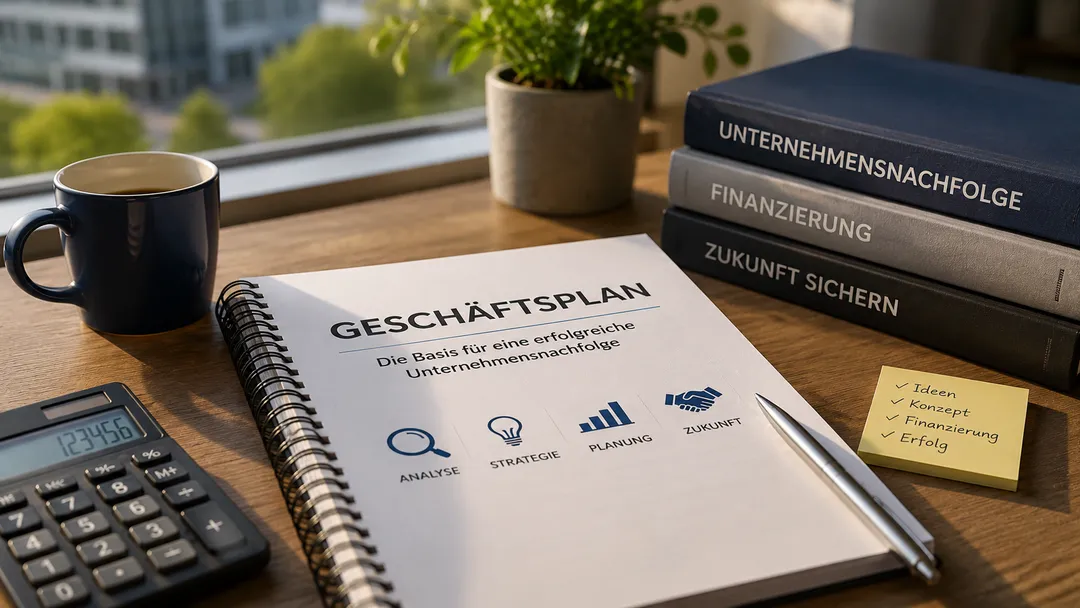
See? It works!
Financing Business Successions. The Business Plan as a Key Element of a Successful Financing Strategy. Learn more!

Opportunities for Success in the Microcap Segment
Microcaps (EBITDA: €0.3–0.7 million) offer buyers affordable acquisition opportunities and strong value leverage through digitalization. Sellers benefit from predictable transitions amid the wave of business succession.
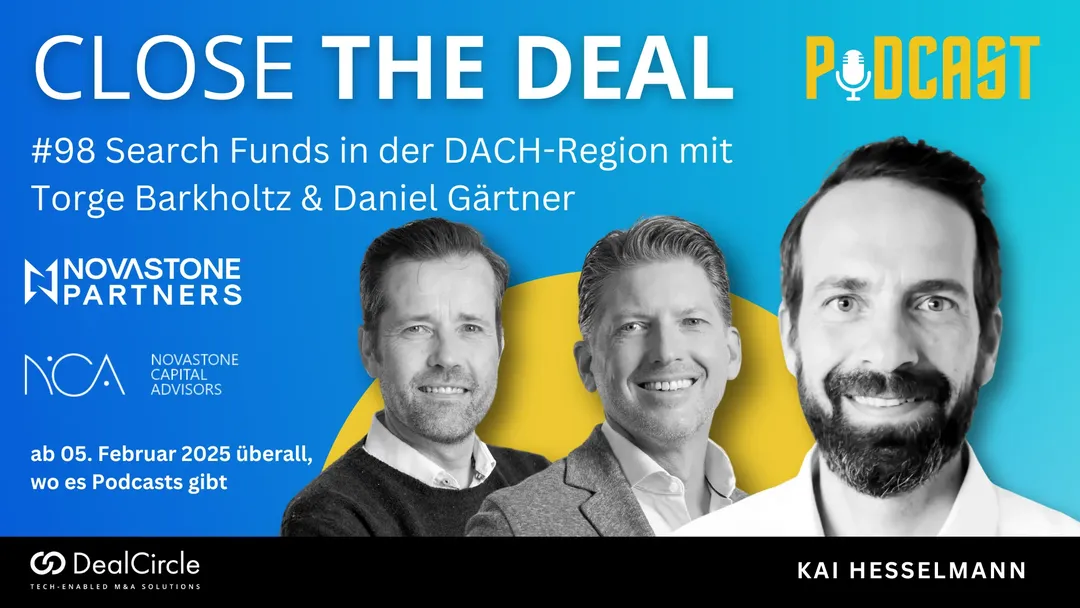
CLOSE THE DEAL 98: Search Funds in the DACH Region
DEALCIRCLE Podcast CLOSE THE DEAL 98: Search Funds in the DACH Region with Torge Barkholtz (Novastone Partners) and Daniel Gärtner (NCA)

Practice Guide: LBO Model
LBO Model: DealCircle Best Practice Guide & Excel Template
Frequently asked questions about financing company acquisitions
How much equity do I need?
As a rule, at least 10–20 % of the total requirement (purchase price including transaction costs) as genuine equity. Together with a subordinated seller loan, banks usually expect 20–40 % own funds.
How does a seller loan work?
With a seller loan, the seller defers part of the purchase price and you repay it after the takeover, often in a single payment at maturity or once the bank financing has been serviced. If the loan is subordinated and on standstill while the bank financing runs, banks recognise it as economic equity. This reduces the equity requirement and shows the bank that the seller believes in the company’s success.
Which documents are needed?
The completed digital questionnaire on the transaction, the target company’s annual financial statements (2–3 years), a current management report (BWA) with a trial balance and, if available, a teaser, an investment memorandum or information on the business model.
Will my request remain confidential?
Yes. The target company is only named after you give your approval, and your name as the buyer only once there is concrete interest or in the course of the introduction.
Does my request trigger a loan application at banks?
No. A request to us is not a loan application: there is no credit or Schufa check, no report to credit agencies and no entry at a bank. Financing partners initially receive only an anonymous teaser. A specific loan application only arises when you yourself start the review with a financing partner after the introduction.
How long does the process take?
We prepare the financing pack within 24 hours; first indications are typically available after 1–3 weeks. The bank’s binding loan commitment depends on further factors and can take 6–12 weeks.
Does public funding make sense?
Funding programmes often offer favourable terms, such as KfW’s ERP development loan for start-ups and succession. They are always applied for through the financing bank. When selecting the banks, we take into account which funding components are suitable for your project.
What does the service cost me?
The review and the introduction are free of charge for you. If successful, we are paid by the financing bank.
What kinds of deals does DUB support?
The purchase of established companies with a solid earnings or asset base (at least two annual financial statements), as an MBI, MBO, succession or strategic add-on acquisition, in each case as a majority acquisition of at least 50 percent of the shares, as well as refinancing and follow-on financing, also after acquisitions that have already been completed. Not suitable are start-up and early-stage financing, restructuring cases without solid fixed assets and projects without a solid base of earnings and figures.
Which regions is DUB active in?
Our network primarily finances projects in the DACH region (Germany, Austria, Switzerland).
Which industries does the service specialise in?
Although some industries and business models are easier to finance, we do not limit ourselves to particular sectors. We are open to projects from all industries.
Who is part of the DUB network?
Our network comprises more than 2,500 financing partners, including regional and national banks, debt funds, alternative lenders, private equity firms, family offices and factoring and leasing companies.
When does it make sense to start looking into financing?
The earlier, the better. Financing is often a decisive success factor in transactions. You should have the financeability checked before the first LOI (letter of intent) at the latest. We are happy to help you with that.
What terms can I expect?
The terms depend on various factors, including the company’s key figures, the business model, and the buyer’s creditworthiness and equity. We give you an estimate of the range within which bank offers for your individual case can fall.
Questions about financing? Talk to us
Our financing team will get back to you shortly.
Ready to tackle your financing?
Start with the digital questionnaire or check your project in advance in two minutes.